Every year, millions of nappies, period products, and incontinence pads end up in Dutch waste streams. The reusable alternatives exist, are high quality, and are cheaper in the long run. So why aren’t they the norm? That is the question at the heart of INTRINSIC, a newly funded research project led by Dr Arturo Castillo Castillo (Utrecht University). The project recently received a grant from the Netherlands Organisation for Scientific Research (NWO) through its KIC Call ‘Consumer Behaviour for a Circular System Transition’, bringing together a consortium of universities, knowledge institutions, and societal partners. We spoke with Arturo and with i4CS programme manager Sacha Tensen about the project and about how i4CS contributed to making it happen.
A neglected corner of the circular economy
Electronics, clothing, furniture: these get most of the attention when people talk about circularity. Personal hygiene products rarely come up, even though the numbers are significant. Someone who menstruates uses between 11,000 and 16,000 period products over their lifetime, while a reusable pad can last up to five years.
“This seemed to be a good niche for us,” says Sacha Tensen. “It is a neglected product group. At the same time, it is a huge waste problem. Local authorities are interested because they see the waste. But many people do not talk about it because it is private.”
That privacy is exactly what sets the challenge apart. Unlike a reusable coffee cup, reusable hygiene products are used in intimate contexts, involve bodily fluids, and carry social stigma. “The barriers to adoption are often higher than other products,” says Arturo. “What can you do so that the start-up cost is not so high? What can you do so that people who want to buy these products can find them?”
INTRINSIC addresses all of this, combining behavioural science, practical innovation, and public policy to identify and remove the key bottlenecks.
How a conversation about furniture led to a research grant
The project’s origin story is a good illustration of how the i4CS network works in practice.
Arturo and Sacha first connected through an earlier i4CS seed project on furniture and then through other EWUU Alliance events such as the EWUU Community Day. When a new NWO call came around, they attended the NWO matchmaking workshops with an open mind for several options. At the first workshop, they connected with Zero Waste Nederland, a national network organisation working to eliminate waste at its source, along with psychologists and public administration specialists. “At that point, we started thinking seriously about reusable hygiene products as a research focus,” Arturo recalls. “I thought this is a problem that is not overcrowded from a scientific perspective.” In the weeks that followed, a growing circle of municipalities and entrepreneurs, many of them small businesses already working on reusable alternatives, joined the group.
Sacha then arranged a meeting with Zero Waste Nederland and with interested scientists to explore a collaboration on this topic. What followed was a gradual process of coalition-building. “i4CS was instrumental in bringing the different expertises together and making sure everybody stayed engaged during the process,” Arturo says. “Going to the event is one thing. But then when you start writing the proposal, making sure that people stay focused and work toward one common goal is a long process, i4CS was instrumental in that.”
Sacha brought something else to the table: firsthand knowledge of how municipalities, provinces, and national government work. “I know a lot of these societal stakeholders from my own work experience. For me it is relatively easy to make connections and explain why this project would be relevant for them and how it aligns with their activities and goals.”
The NWO call itself offered an unusual opening. For the first time in this type of grant, societal partners could participate as co-applicants and receive funding directly, a pilot that made it possible to formally bring Zero Waste Nederland and SUPZero into the consortium. “Together with them, we also managed to bring in a lot of co-funding,” Sacha says. “Zero Waste Nederland had already done work on reusable hygiene products and had a strong network in municipalities and provinces.”
The full consortium now includes Utrecht University, Radboud University, Hogeschool van Amsterdam, Wageningen University, UMC Utrecht, Zero Waste Nederland and SUPZero.
Starting where people are
INTRINSIC is deliberate about the right entry point for behaviour change. Rather than appealing to environmental conscience first, the project starts with more immediate motivations: cost savings, avoiding chemical additives, aesthetics, availability, and autonomy.
“For many environmental technologies, people tend to appeal to the highest levels of motivation, doing it for moral good, but that is difficult to achieve at the start,” Arturo explains. “Sometimes people have more urgent needs and priorities. Only later, when they realise they are saving money, gaining more control and achieving some personal reward, can they begin to think, I am also doing environmental good. You cannot expect people to start by relating only to environmental motivation.”
This framing has practical implications for how products are presented, priced, and distributed. One concrete example: care institutions such as childcare centres and care homes are potential early adopters because their cost structures work differently. They manage both the purchasing and the waste costs in one budget, which makes the economic case for switching to reusables immediately visible, rather than falling across separate departments in government institutions.
The project will also test specific interventions: what happens if a washing service company gets a reduced VAT rate? If visibility increases by a given amount? If the taboo decreases because more people are talking openly about these products? “We are not going to overhaul this sector with one project,” Arturo says. “But we will be able to put our finger on key levers.”
What success looks like
High waste management costs, persistent menstrual poverty, continued exposure to chemical additives in single-use products: the costs of the status quo are real, even if they are rarely added up in one place. That is precisely what INTRINSIC aims to do. “By bringing together the costs of not changing and the potential advantages of changing, it becomes clear that if we work together and do a few things, we can unlock several benefits,” Arturo says. “We hope the project makes that visible.”
The Province of Noord-Brabant is already an active partner and could serve as a catalyst for other regions if the approach proves effective there.
For Sacha, the project also embodies something broader about what i4CS is for. “I hope this project proves that it is possible for academics to collaborate with society in a constructive way and actually deliver impact. I also hope it can show that using these reusable products is not a step back and is not inconvenient but can actually bring a lot of positive things into people’s lives.”
About the interviewees
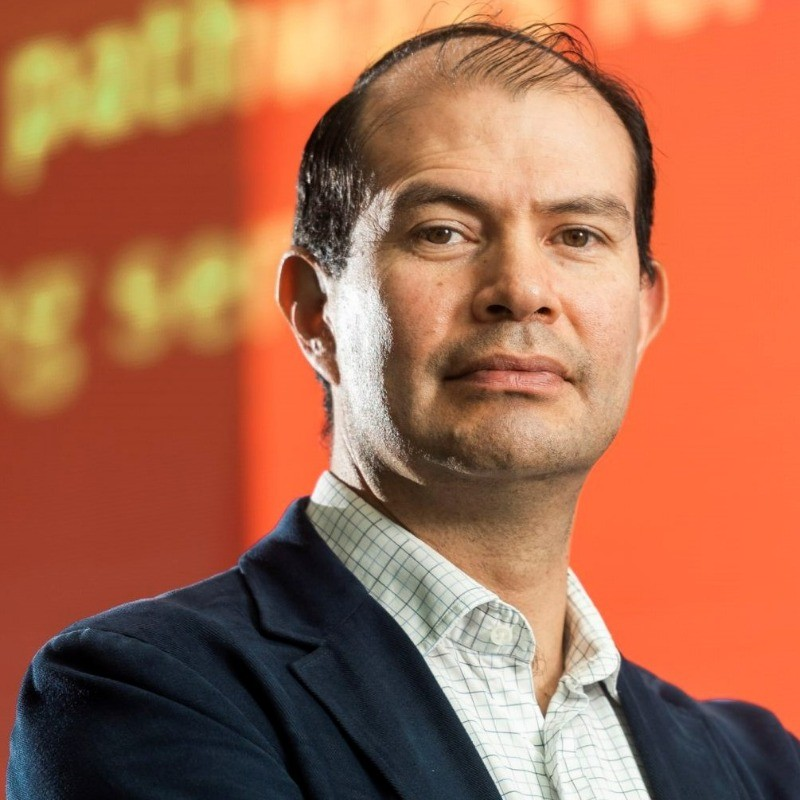
Dr Arturo Castillo Castillo is Assistant Professor at the Copernicus Institute of Sustainable Development at Utrecht University. His research focuses on the conditions for transitioning to a less wasteful, more resource-efficient and wellbeing-focused society, with a particular interest in the “smaller loops” of the circular economy: reuse, refurbishment, and product-service systems. Utrecht University staff profile.

Sacha Tensen is Programme Manager at the Institute for a Circular Society (i4CS), part of the EWUU alliance. She works at the intersection of research and practice, connecting academics with municipalities, provinces, and societal partners to develop regional circular solutions. Before joining i4CS, she worked across municipal, provincial, national, and private sector organisations. Sacha Tensen on LinkedIn
INTRINSIC (Circular ecosystems: EnablINg the TRansitIiN to reuSable personal hygiene produCts) is funded by NWO via the KIC Call ‘Consumer Behaviour for a Circular System Transition’. The Institute for a Circular Society (i4CS) supported the consortium formation, proposal logistical support, and co-funding process. Read more about the project on the INTRINSIC project page.