On June 8th, the Circular Society Co-Creation Event 2026 brought together researchers, professionals, policymakers, and societal partners from across disciplines to work on one shared ambition: accelerating the transition toward a circular society. Rather than a traditional conference centered on listening and knowledge transfer, this event was designed as a collaborative working day. One in which ideas could be tested, challenged, and shaped collectively into actionable directions.
Opening the conversation
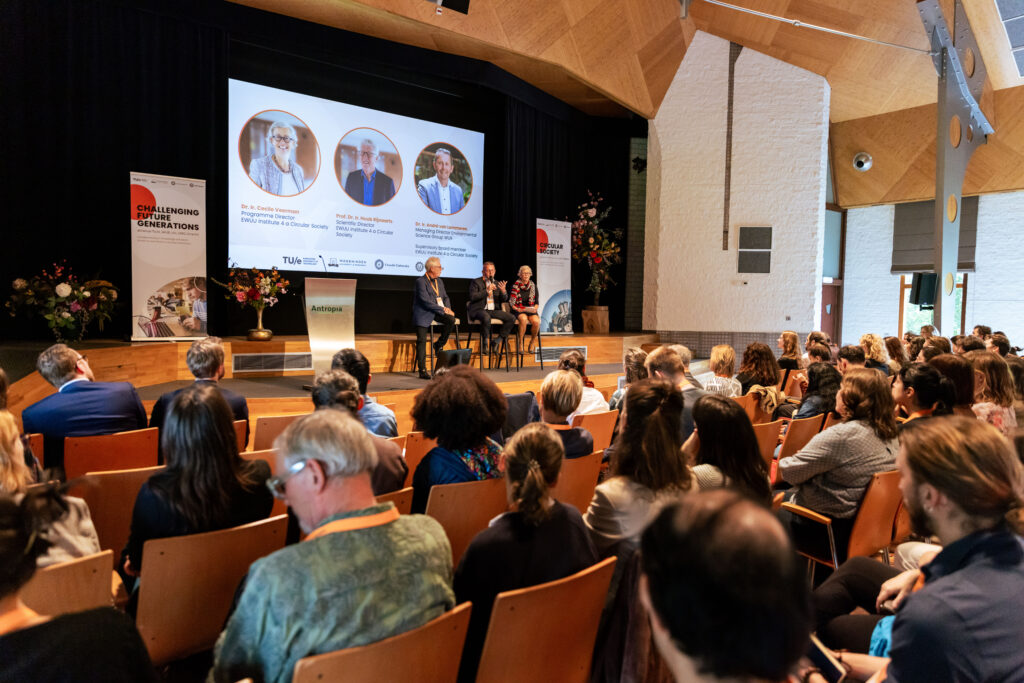
At Antropia in Direbergen, the day began with a shared welcome and introduction by Programme Director Cecile Veerman, Scientific Director Huub Rijnaarts and Supervisory Board Member André van Lammeren. Together they set the tone for openness, collaboration, and active participation. Participants were invited to step out of their disciplinary silos and engage in cross-sector dialogue. A great start to the day!
Rethinking growth and efficiency
The first keynote set a strong conceptual foundation for the day. In a provocative and timely talk titled “Sufficiency is the new efficiency”, Paul Schenderling challenged conventional economic assumptions about growth and efficiency.
He invited the audience to move beyond the idea that sustainability can be achieved through doing “more with less.” Instead, he argued for a shift toward sufficiency—rethinking what is “enough,” and redesigning systems around quality, wellbeing, and ecological boundaries rather than continuous expansion.
This perspective landed strongly with participants and offered a powerful lens through which the rest of the day unfolded.
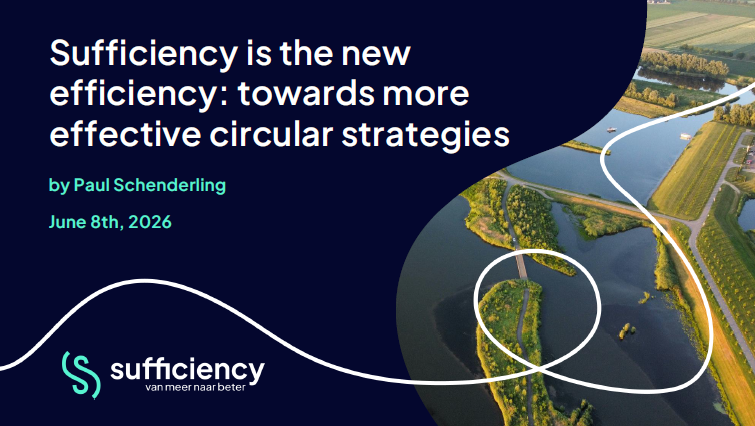
You can download Paul Schenderling’s presentation here.
From themes to tracks: Co-creation in action
Following the keynote, participants moved into three thematic tracks focused on key domains of circular transformation: circular healthcare systems, housing and construction, and critical materials and resource recovery. Each track was introduced by societal stakeholders and researchers who helped frame the key challenges and knowledge questions that would guide the sessions.
From that moment on, the emphasis shifted from listening to doing. The sessions were built around dialogue rather than presentation, and experimentation rather than perfection. Across all tracks, something similar happened: once diverse perspectives were brought together in a structured setting, new ideas started to emerge almost immediately.
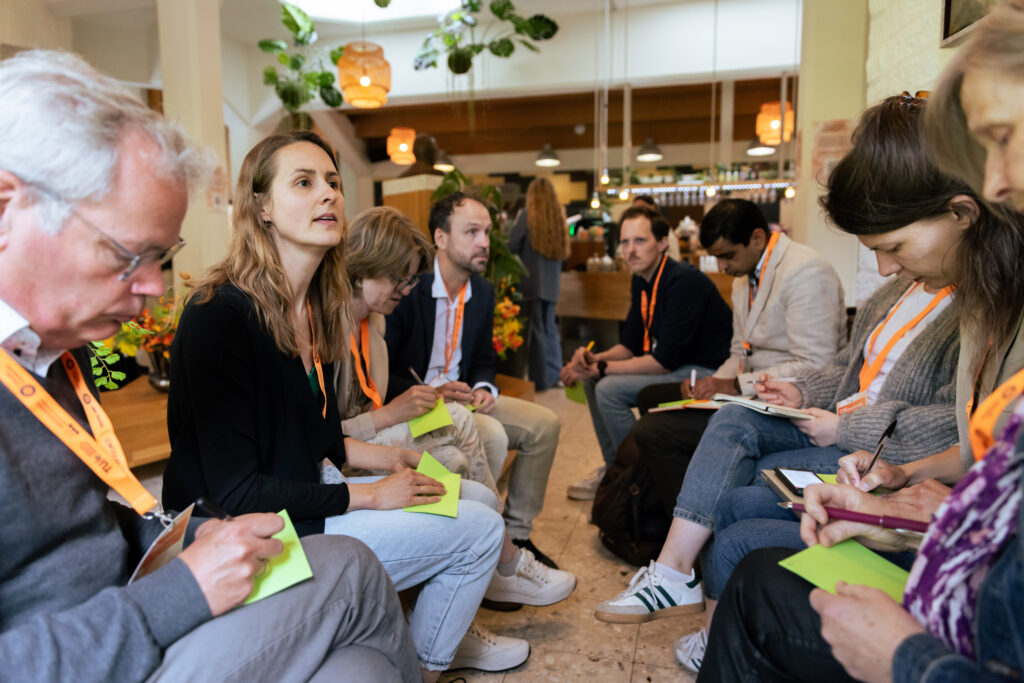
Throughout the morning, groups explored their topics broadly: mapping challenges, identifying barriers, and searching for leverage points that could drive change. Gradually, conversations began to shift from exploration toward direction.
Deepening ideas and building momentum
In the second round of co-creation sessions, the energy became more focused and solution-oriented. Participants worked on refining ideas, identifying potential collaborations, and translating early concepts into more concrete directions.
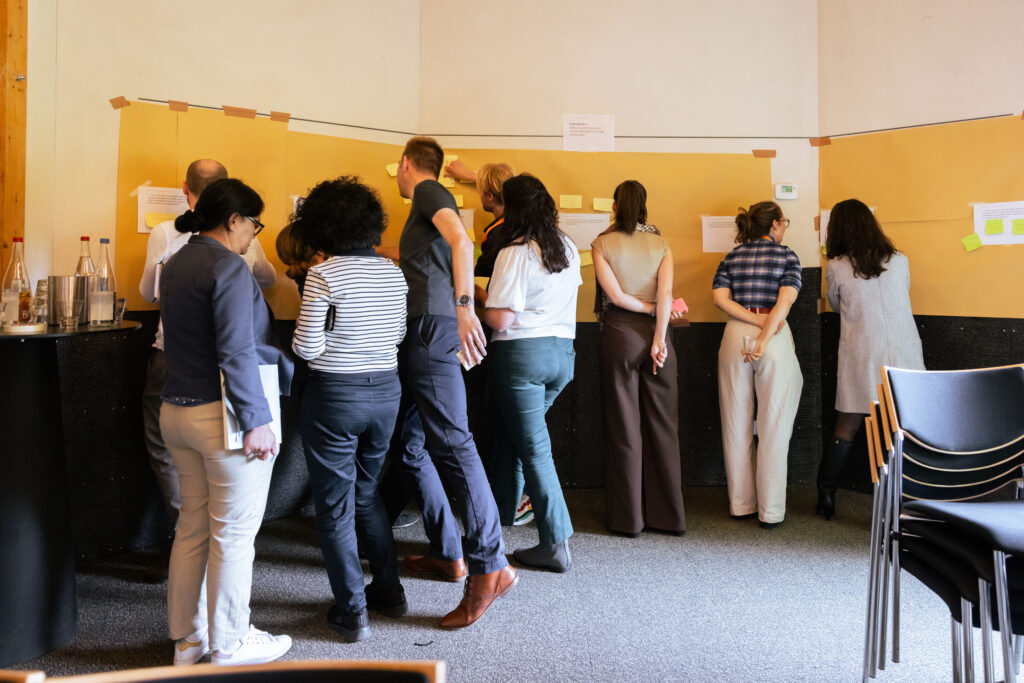
For many groups, this marked the transition from exploration to direction-setting, an important step in moving from ideas to implementation.
A long-term perspective on circularity
In the afternoon, the second keynote by Prof. Dr. Simona O. Negro, Full Professor of Circular Societies at Utrecht University, shifted the focus to a long-term perspective. In her talk “Are we on track towards circular societies in 2050?”, she reflected on how progress toward circularity can be understood, measured, and critically assessed over time.
Her contribution invited participants to zoom out from today’s challenges and project ideas, and instead consider the broader trajectory of systemic change. What does meaningful progress toward a circular society actually look like over decades—and how do we ensure we are not only moving, but moving in the right direction?
With that reflection, the formal program came to an end. What remained was a strong sense of shared direction, new connections, and ideas that were clearly ready for next steps.
From co-creation to action: seed funding and next steps
After the main event, participants had the opportunity to stay for the afternoon seed funding matchmaking sessions. These sessions were designed to support the development of the most promising ideas that emerged during the co-creation tracks and to help teams take the first steps toward turning these ideas into concrete proposals.
The Seed Funding Call 2026 of the Institute for a Circular Society (i4CS) offers up to €40,000 per project for early-stage, transdisciplinary initiatives that contribute to the transition toward a circular society.
During the matchmaking sessions, participants were able to connect with potential collaborators across disciplines and institutions, refine their project ideas, and explore how these could align with the three thematic tracks. The focus was on forming strong, diverse consortia and shaping ideas that could develop into full proposals ahead of the September deadline.
Rather than an endpoint, these sessions marked the beginning of a next phase where the energy and insights from the co-creation event are translated into actionable research collaborations with the potential to be funded and implemented.
Closing reflections
We loved the energy, new insights, and connections that had emerged. While each track developed its own specific ideas and directions, the overarching outcome was clear: there is strong momentum for collaborative action toward a circular society.
More than anything, the Circular Society Co-Creation Event 2026 demonstrated the value of bringing people together in an environment designed for co-creation. When disciplines intersect and hierarchies are flattened, new possibilities emerge not only for individual projects, but for the broader system transformation that is urgently needed.
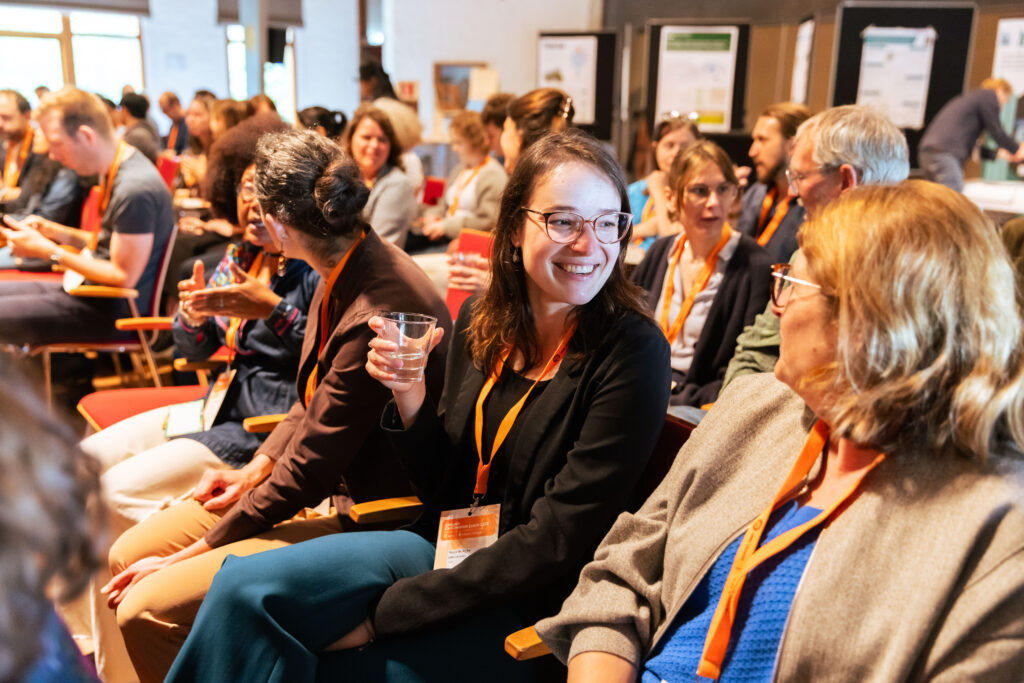
Thank you to all participants, speakers, and organizers for their energy, insights, and commitment to co-creating a circular society!
Want to see more? See all photo’s in our album.
Photo’s by Lize Kraan