What Robotic Summit 5.0 revealed about reflection, responsibility and sustainability in surgery
Robotic surgery is often associated with progress: precision, innovation and improved patient outcomes. But what happens when sustainability becomes part of that conversation—not as a technical challenge, but as a question embedded in everyday clinical practice?
Following Robotic Summit 5.0 which was held 30 January 2026 in Papendal, the research project Shifting mindsets towards a more responsible and circular relationship with surgical robots reflects on how healthcare professionals engage with the environmental impact of surgical robotics. The project is seed funded by the Institute 4 a Circular Society (i4CS) and takes a planetary health perspective on high-tech surgical care.
Rather than presenting solutions or conclusions, the research focuses on awareness, responsibility and the role of professional reflection in shaping more sustainable futures.
Looking beyond clinical performance
Robotic surgery is frequently framed as a step forward in sustainable healthcare. Yet independent research into its environmental footprint remains limited. Robotic procedures rely heavily on single-use and limited-use instruments, complex packaging and resource-intensive systems. These impacts often remain outside the scope of clinical protocols and daily decision-making.
The Shifting Mindsets project approaches this challenge by focusing on the human dimension of robotic surgery. It explores how surgeons, nurses and other healthcare professionals relate to sustainability in their work, and how their perspectives and practices may influence future design, procurement and innovation choices.
Art as part of the research
A distinctive element of the project is the use of art as a research method. In collaboration with renowned visual artist Maria Koijck, an art installation and video were developed and presented during Robotic Summit 5.0. Embedded within a programme centred on technological innovation, the intervention introduced an unexpected moment of reflection.
Watch the video (Dutch subtitles):
An impression of the art installation:
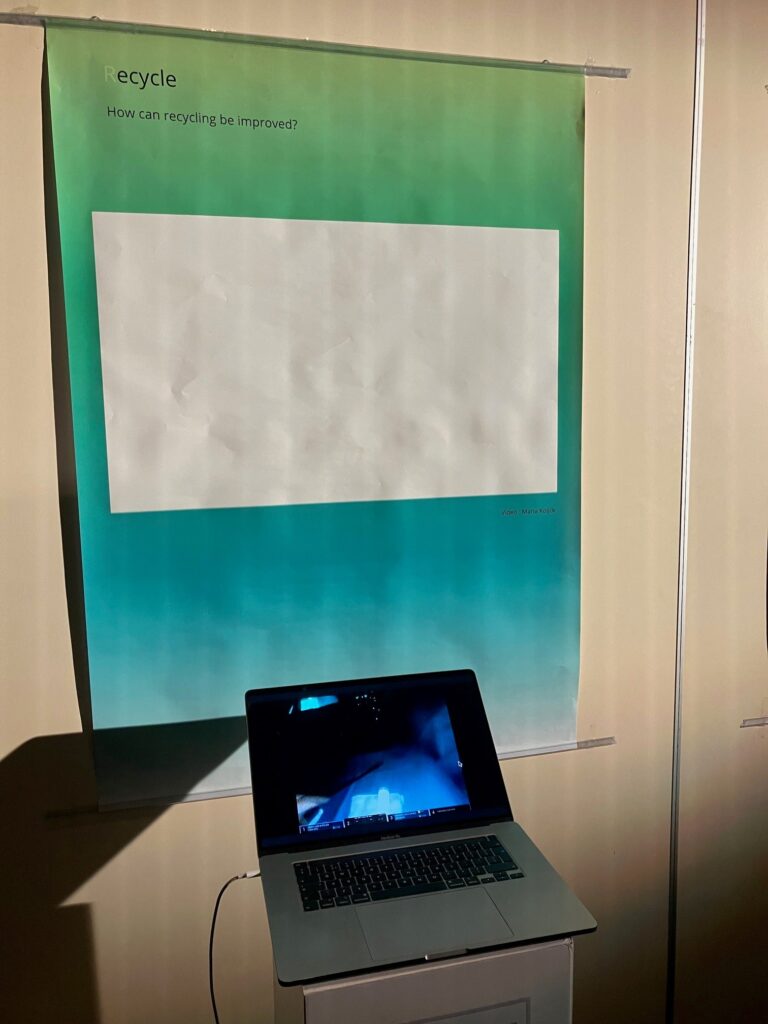
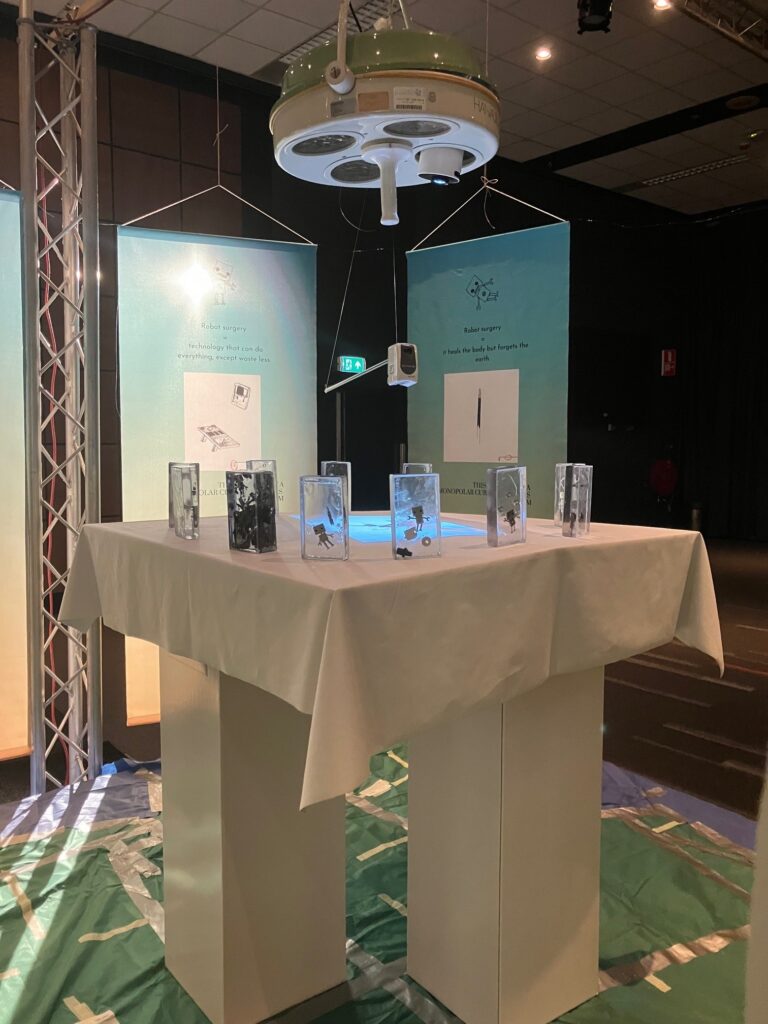
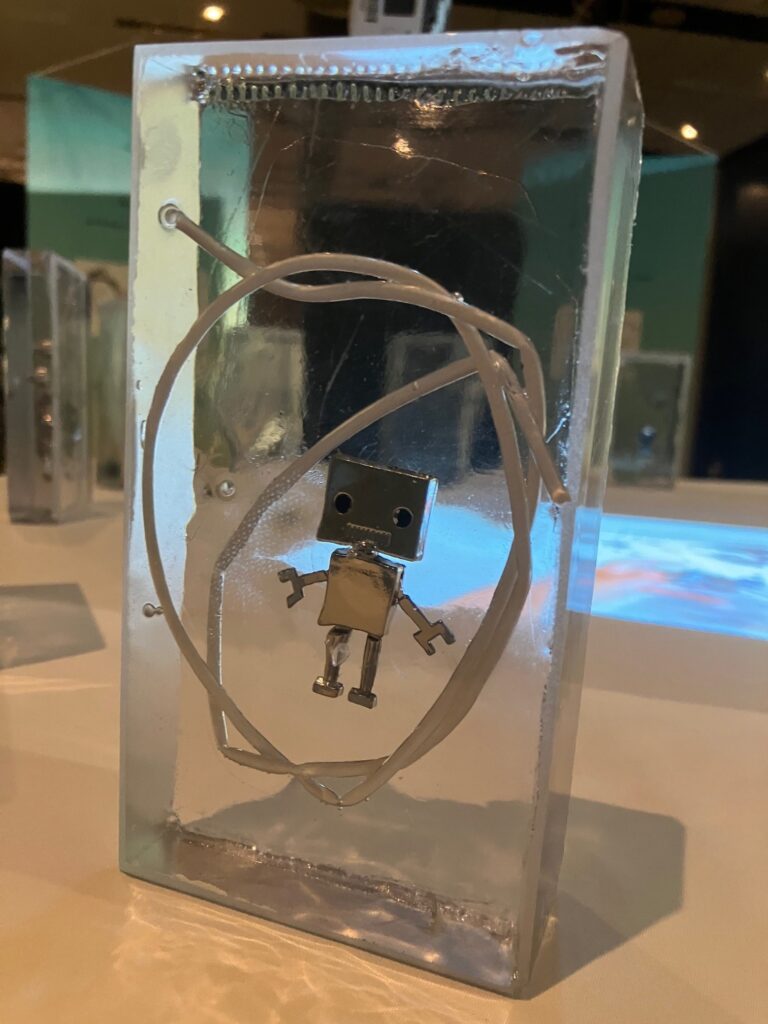
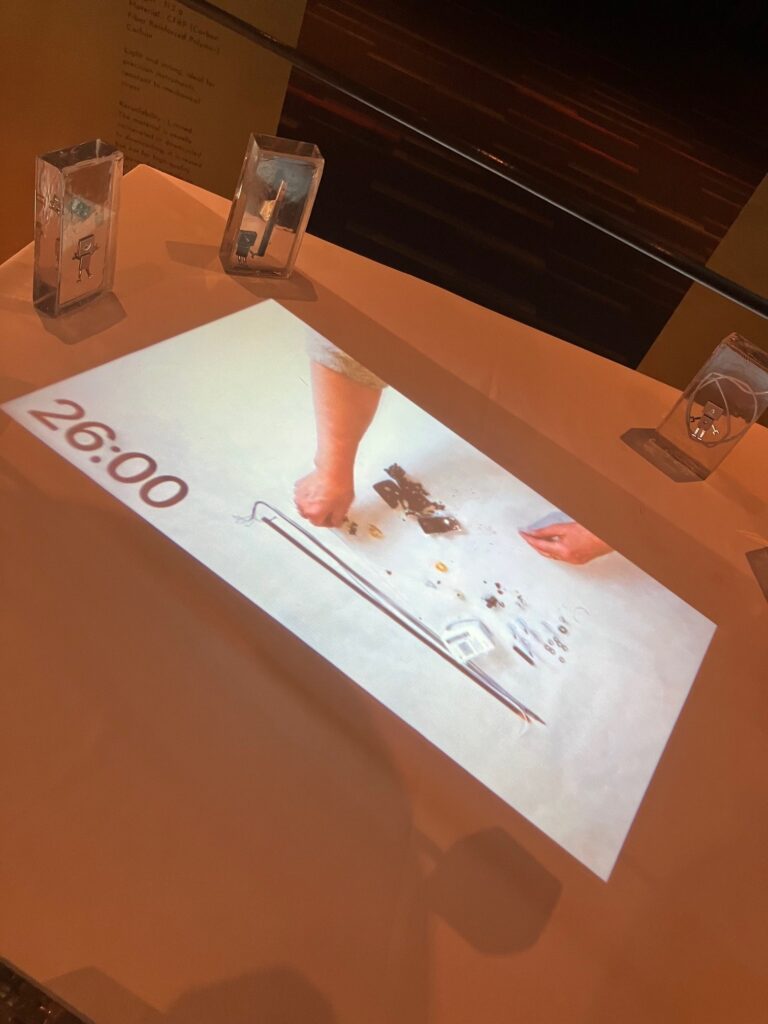
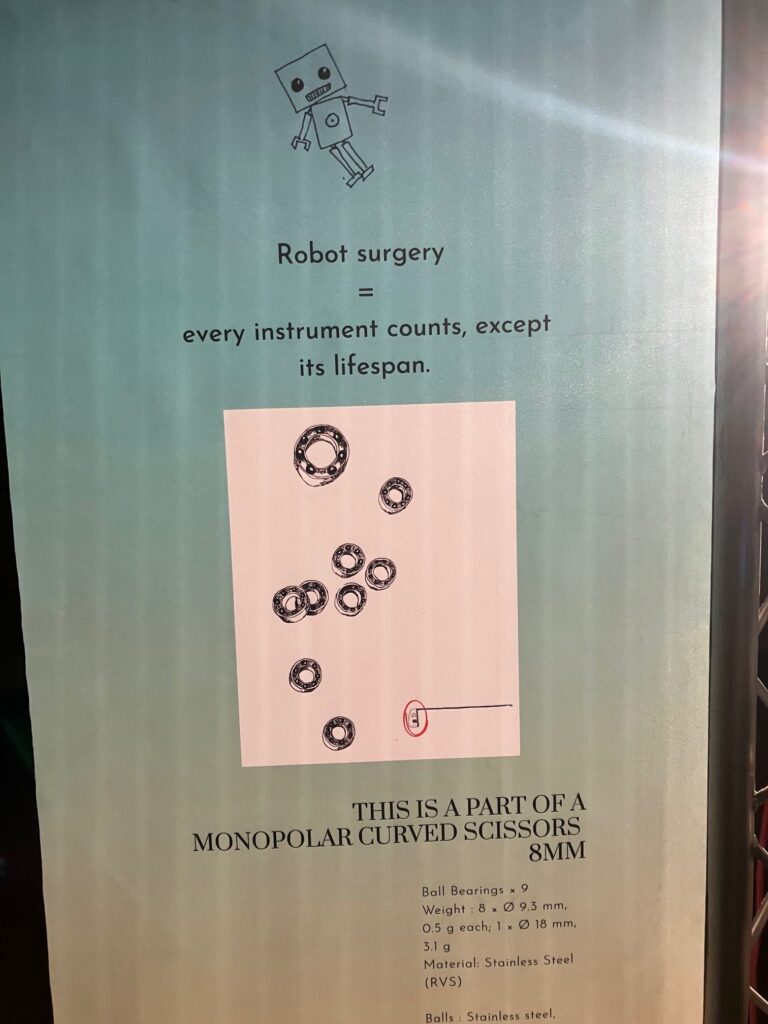
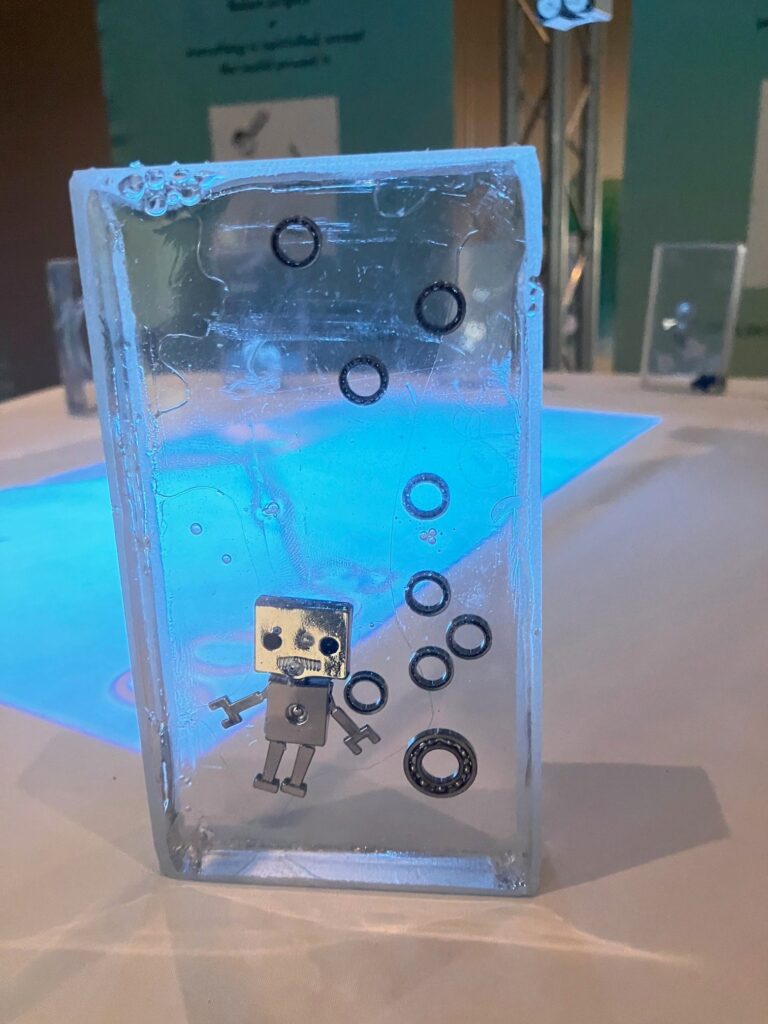
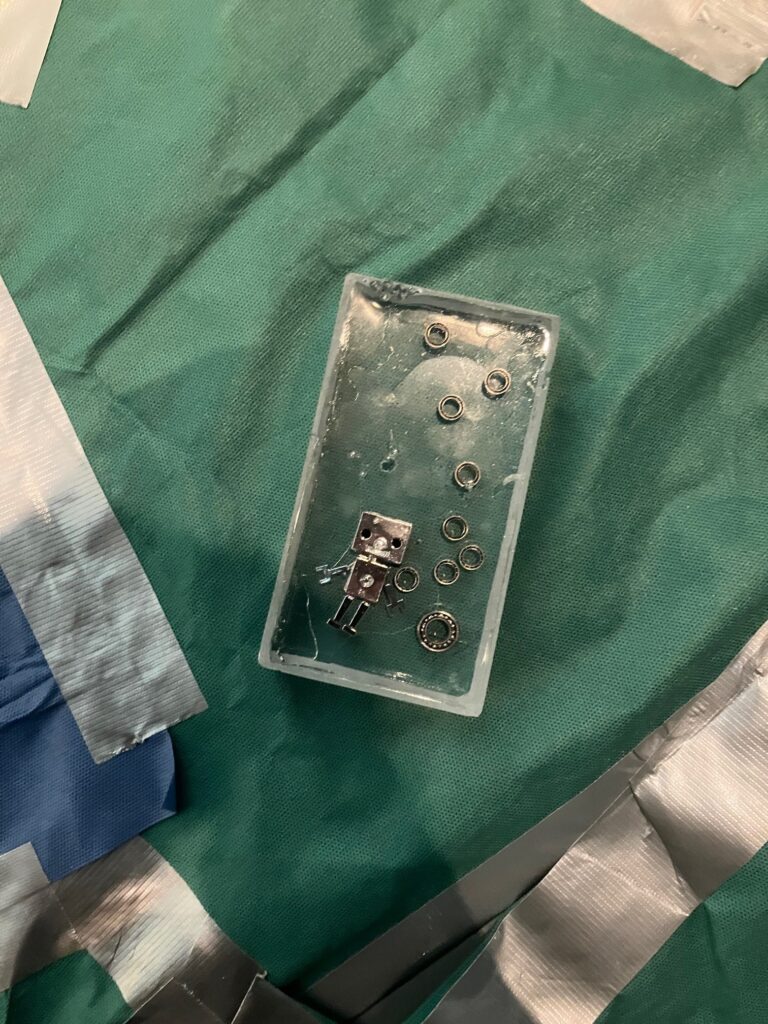
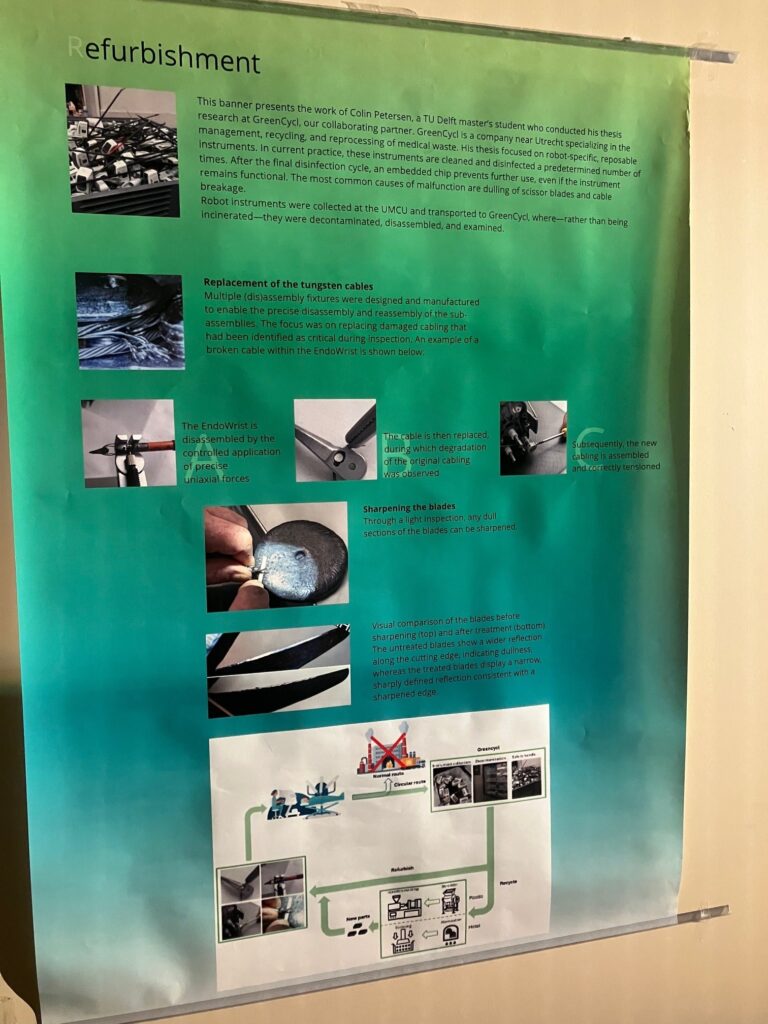
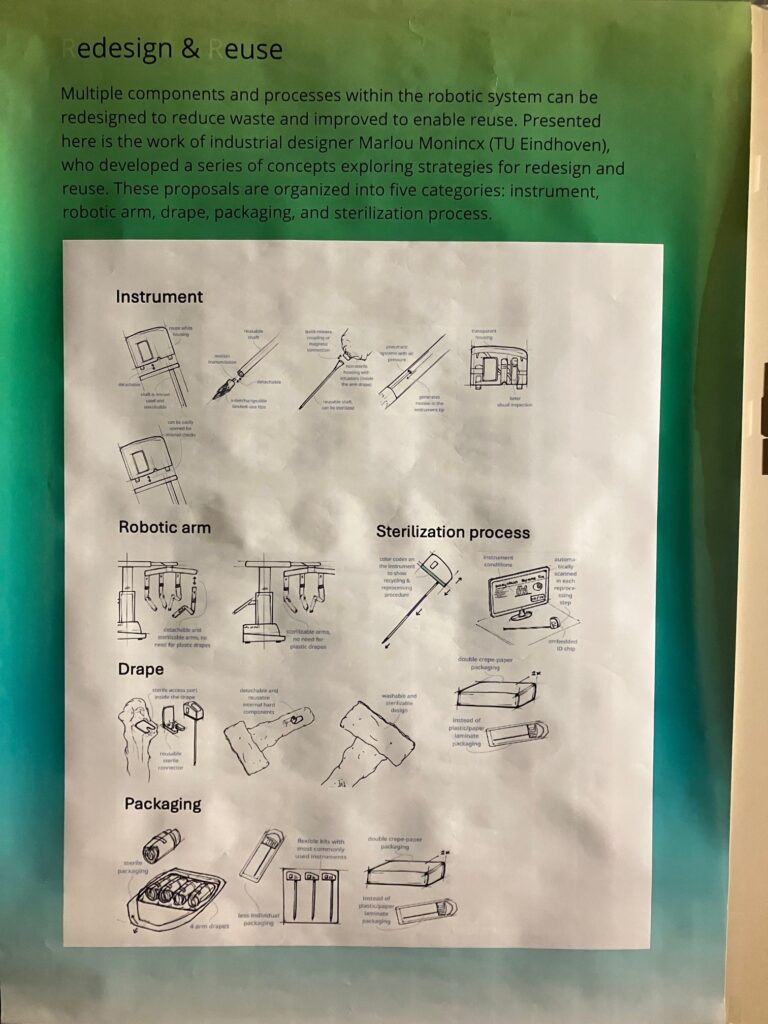
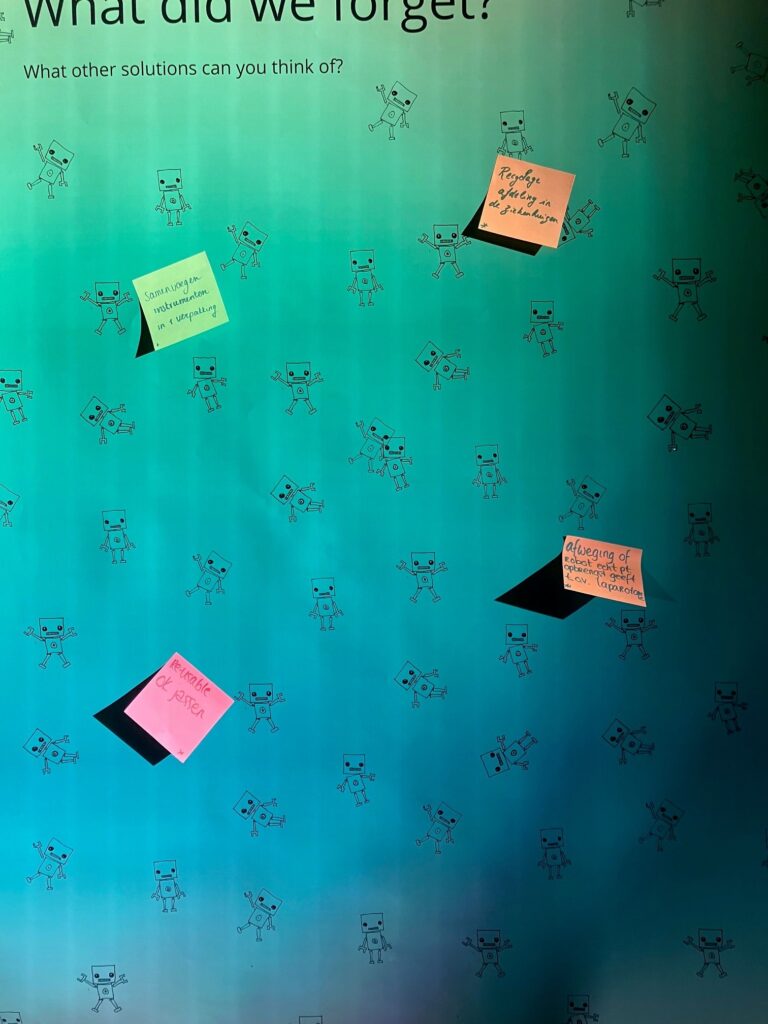
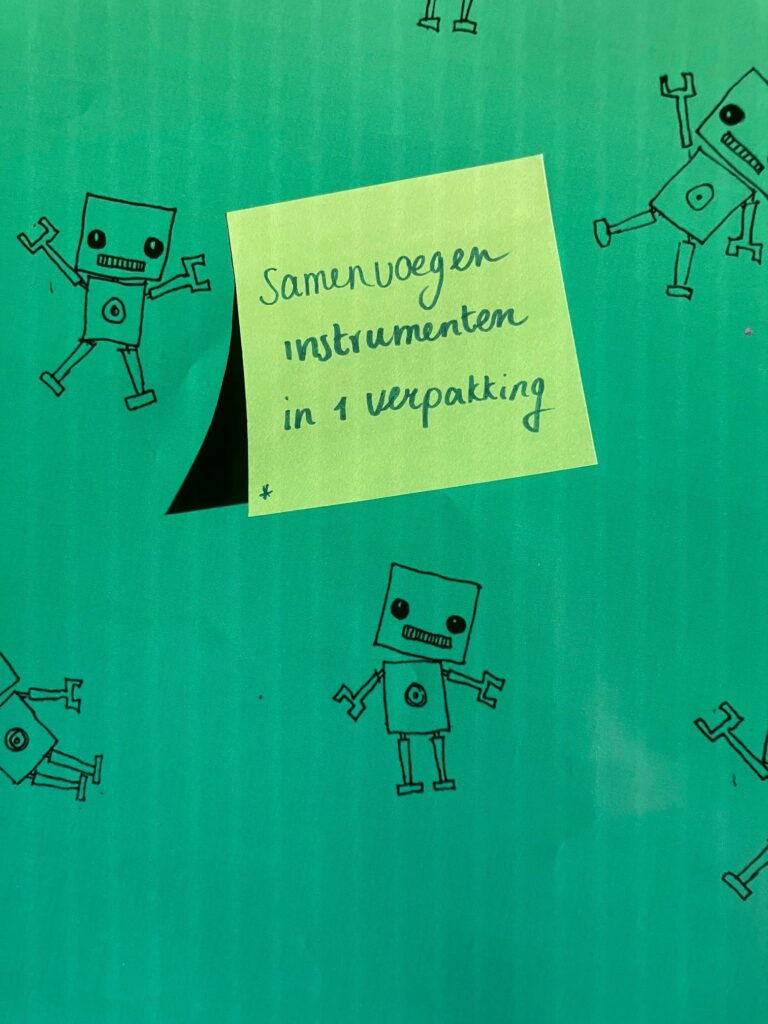
The artwork did not aim to instruct or persuade. Instead, it invited participants to pause and consider the relationship between high-tech, patient-centred care and its broader environmental impact. Researchers studied these encounters through pre- and post-assessments and in-depth conversations, exploring how evidence-based environmental and social information resonates with healthcare professionals.
This remains research in progress. No conclusions are drawn at this stage; the focus lies on understanding whether and how professional mindsets begin to shift.
From reflection to responsible innovation
The project forms part of the Circular Safe Hospitals research line supported by i4CS and brings together expertise from surgery, social sciences, circular innovation, robotics engineering, industrial design and the arts. By combining life cycle assessment, social impact analysis and design research with artistic intervention, the project explores how more responsible and circular approaches to surgical robotics might emerge—through both system design and professional practice.
More information about the project and its interdisciplinary approach can be found here:
→ Shifting Mindsets project page
As discussions about sustainability in healthcare continue to grow, this research highlights an often-overlooked dimension: the role of reflection, responsibility and everyday professional choices in shaping the future of surgical innovation.